Scaling a content team of one with Claude
RockWallet didn't really have a content team. For most practical purposes, it was just me. The company had more designers, products, features, and surfaces than one writer could cover, and every word in a crypto app carries serious weight. Crypto bros aside, most new users felt some degree of skepticism towards crypto. So I built a system of Claude projects, skills, and agents that turned our content guidelines into working tools that helped win our users' trust.
The problem
A fintech product generates copy demands constantly: new flows, error states, partner handoffs, legal updates, marketing requests. With a single writer, things start to slip. Turnaround time grows and consistency suffers as other teams write their own copy to fill the gap.
The usual answer is "Use AI to write it." However, letting anyone paste instructions into a chatbot and hoping for the best, produces exactly the kind of generic, off-voice, compliance-risky copy you'd expect.
The goal
Build AI tooling that codified our content standards deeply enough that the output was trustworthy, fast, and safe for non-writers to use, but never a substitute for human judgment on high-stakes copy.
What I built
A Claude project as the content hub
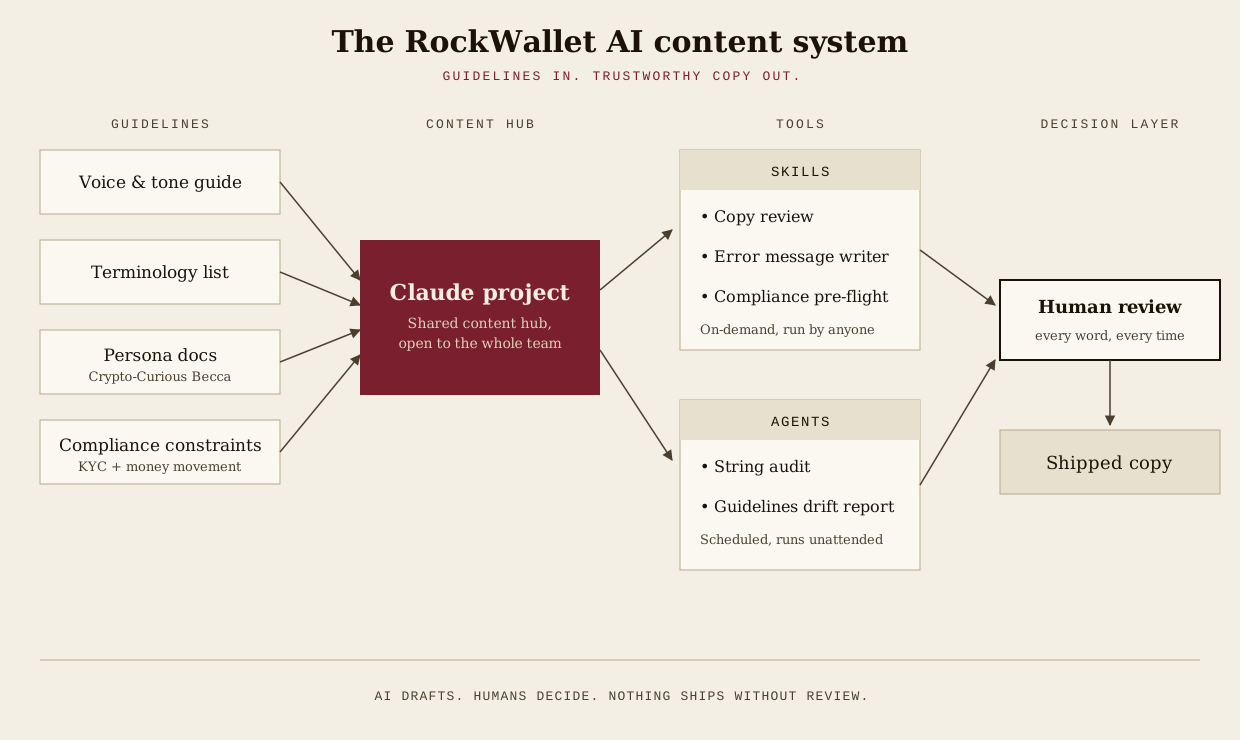
The foundation was a shared Claude project loaded with our voice and tone guide, terminology list, persona documentation for Crypto-Curious Becca, banned-words list, and the compliance constraints that governed KYC and money-movement language. Anyone on the team could draft inside the project and get output that already sounded like RockWallet, instead of starting from a blank prompt.
Skills for recurring jobs
I used guidelines to tell the LLM what good copy looks like. Skills did the real work. To that end, I wrote a set of reusable skills for the tasks that came up regularly that anyone could install on their Claude instance:
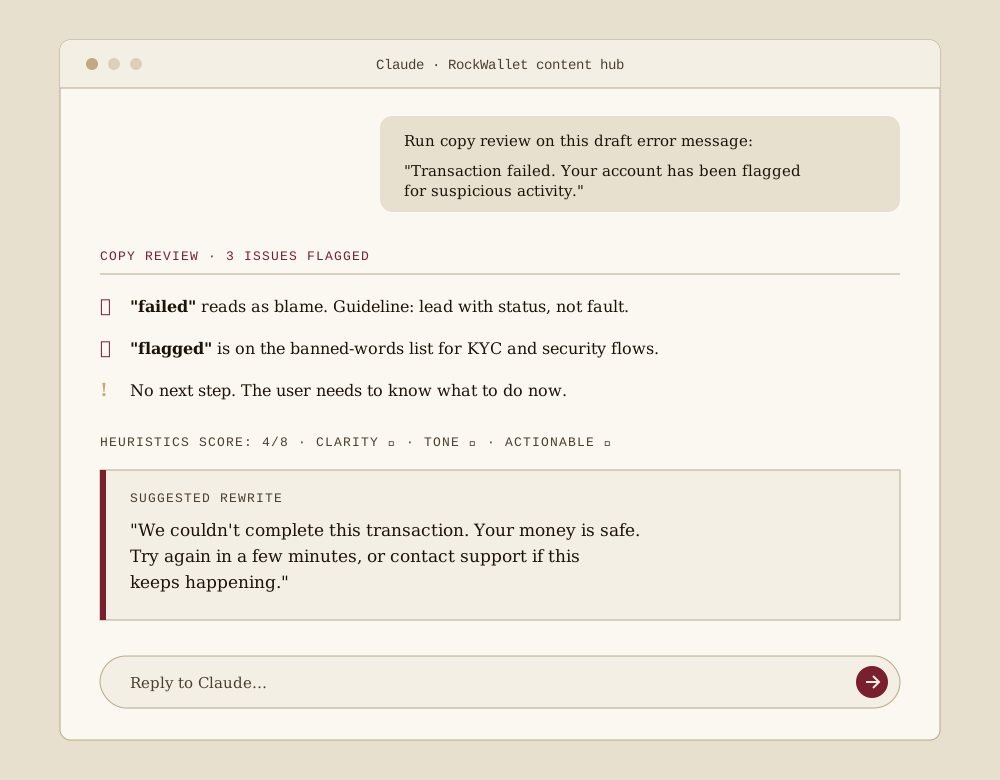
- Copy review, which scored draft copy against our content heuristics and flagged voice, clarity, and terminology issues before review
- Error message writer, which generated error states following our status-first, no-blame patterns
- Compliance pre-flight, which checked copy for phrases that overpromised, implied guarantees, or used restricted financial language
Each skill encoded decisions I'd otherwise re-make and re-explain every time. The error message skill alone meant a PM could get a usable, on-pattern draft without waiting on me, and I did the review.
The skills also worked where the copy actually lived: in Figma. Using Claude Code connected to Figma's MCP server, a designer could select a frame and run a copy review against our guidelines on the spot, without copying strings out of the design and pasting them into a chat window.
Agents for the work nobody has time for
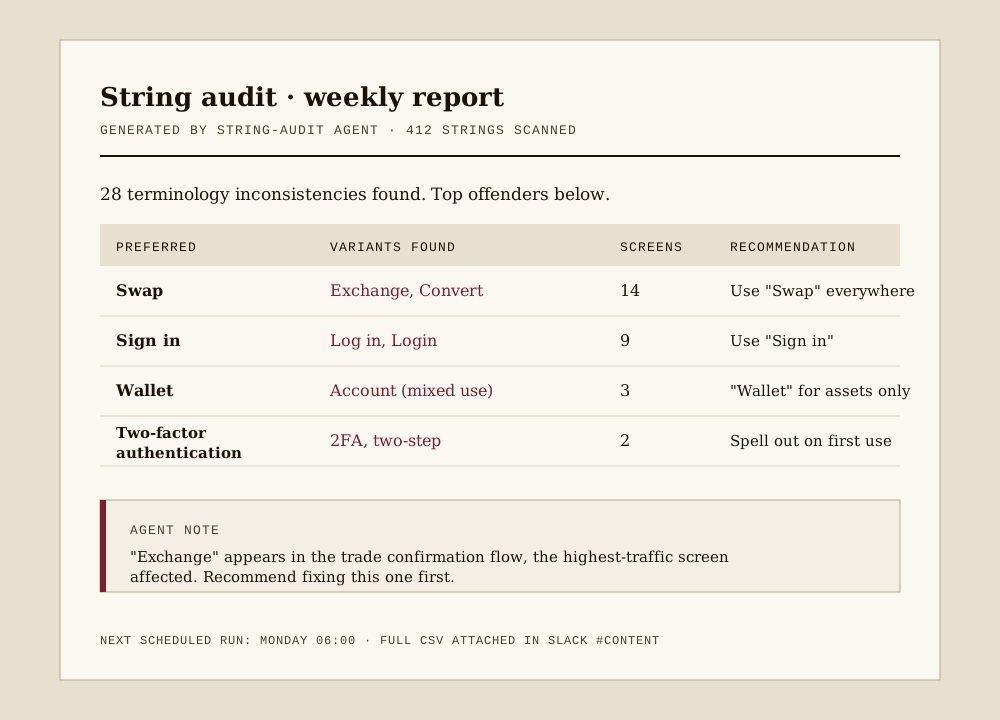
Let's be real, some content work is valuable but not all that urgent. I set up agents to handle it: a string audit agent that crawled product copy and flagged inconsistent terminology, and a guidelines agent that compared recently shipped copy against the style guide and produced a periodic report that anyone on the product team could view and catch guideline drift before it became a big design debt problem.
The string audit ran against the source of truth: our Figma files. Using the Figma REST API, the agent walked a file's document tree, extracted every text string along with its page and frame location, and reviewed the full set against our terminology list. No one had to open Figma, select anything, or remember to run it. It ran on a schedule and posted the report where the team already worked.
Keeping a human in the loop
The system had a hard rule: AI drafts with humans at the decision layer. Everything got human review before shipping, and compliance-sensitive copy got the same legal review it always had. The AI never invented compliance language, it only checked against language legal had already approved. My goal here was not to automate myself out of a job. Rather, the goal was to move myself up the org chart, as it were, from production to direction.
Results
- Copy turnaround time dropped from 1 week to 3 days
- 30 percent of routine copy requests were handled by non-writers using the skills, with review instead of writing from scratch
- The string audit surfaced 28+ terminology inconsistencies in the first pass
- Saved an estimated 10 hours per week, redirected to strategy and high-stakes flows
The biggest result? Content stopped being a bottleneck.