Teaching prompt engineering without the jargon
BigCommerce developed BigAI Copywriter to help customers create product descriptions using AI, without appearing to exploit trends. The challenge was teaching users a new skill inside the product itself, invisibly.
The problem
BigCommerce wanted to leverage large language models to generate product descriptions for merchants. The goal was AI integration that solved a real merchant problem. But to get good output from an AI tool, users needed to understand how to write a good prompt. Most of them didn't know what a prompt was.
Teaching prompt engineering explicitly would've felt technical and intimidating. Hiding it entirely would produce mediocre results and frustrated users.
The goal
Design and write a UI that taught users the principles of effective prompting without ever using the word "prompt", giving both casual users simplicity and experienced marketers advanced control.
The audience
Informational needs
- What business value does AI offer me?
- How does BigCommerce integrate AI?
- How do I write product descriptions faster?
Jobs to be done
- Write compelling product descriptions efficiently
- Maintain authentic brand voice in AI output
- Feel ownership over the results
Psychological profile
- Progressive disclosure, don't overwhelm upfront
- Familiarity bias, prefer what looks like tools they know
- IKEA Effect, control increases perceived value
Ideation and development
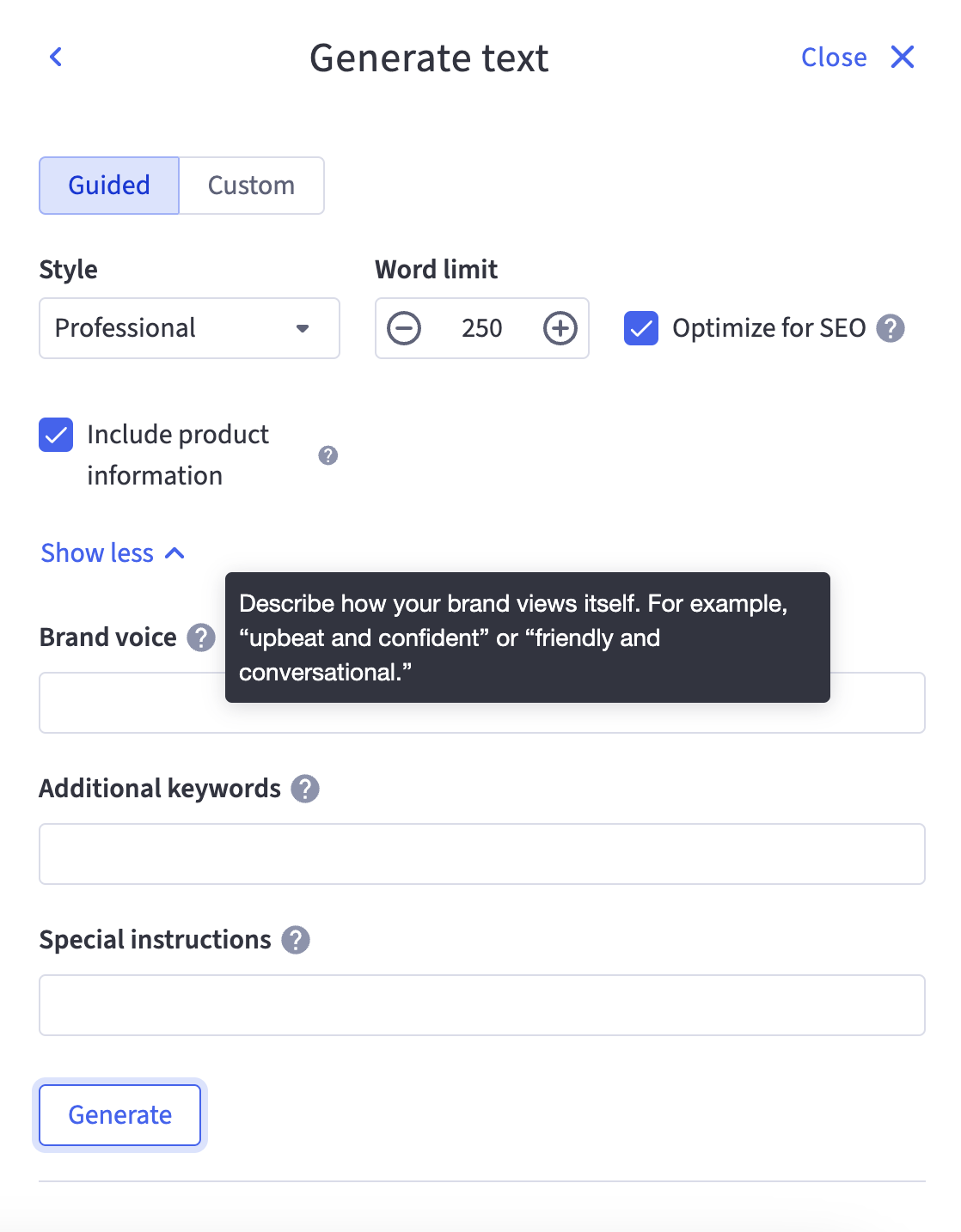
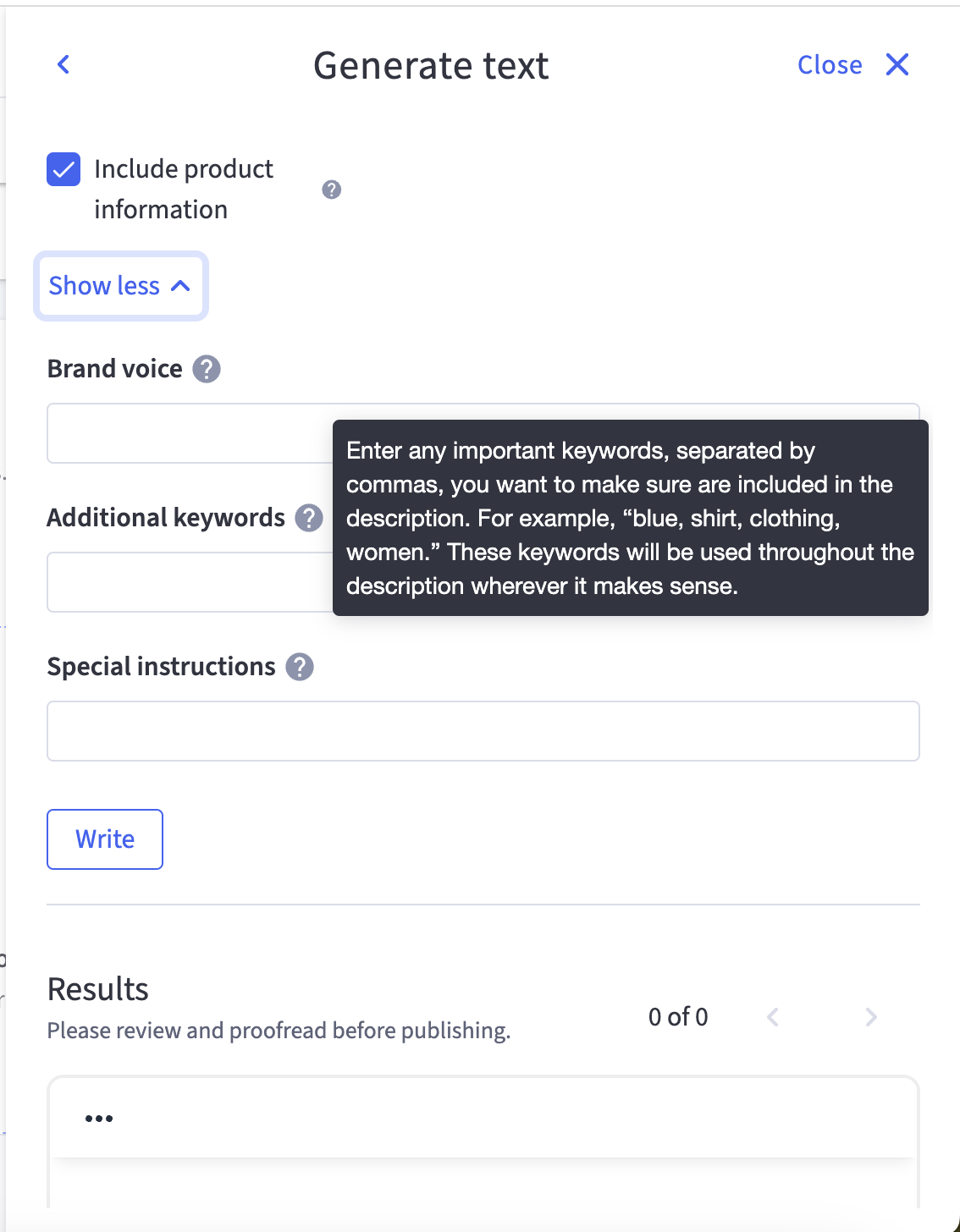
I identified four essential characteristics of a good prompt and built the UI around them without naming them as such:
- The request, what do you want the AI to produce?
- Formatting requirements, how should the output be organized?
- References, what data or context should it draw from?
- Framing, what tone, context, or constraints apply?
Each input field in the UI reflected one of these elements. Tooltips taught the underlying principle in plain language, no jargon required. Early mockups evolved through several rounds of refinement before landing on the final interface.
Resolving feedback
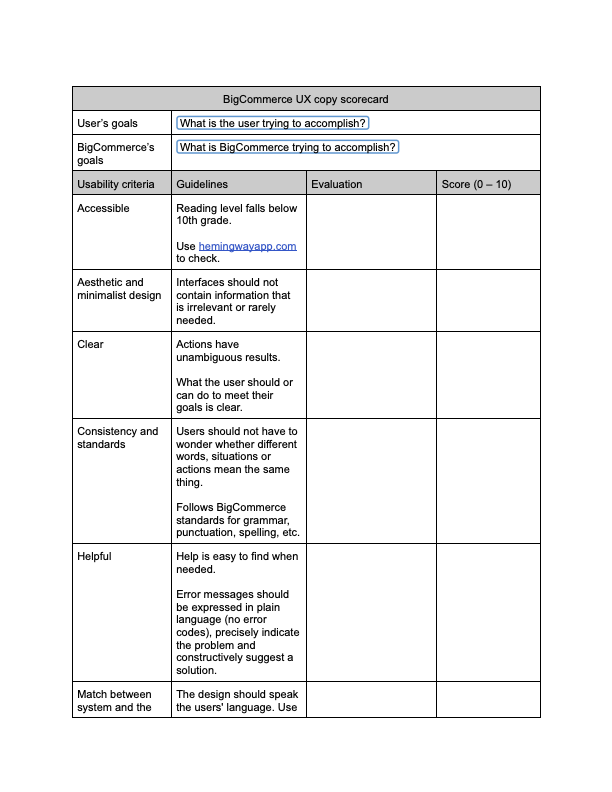
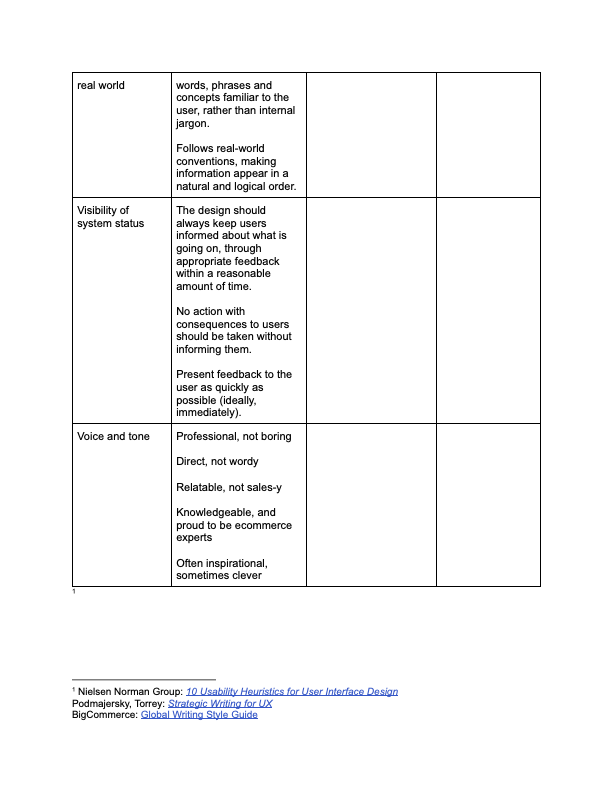
When stakeholders proposed copy that conflicted with usability goals, I used a content heuristics scorecard, evaluating text against eight criteria based on content design best practices. This gave copy decisions a data-grounded foundation rather than leaving them as a matter of opinion or seniority.
Further refinement
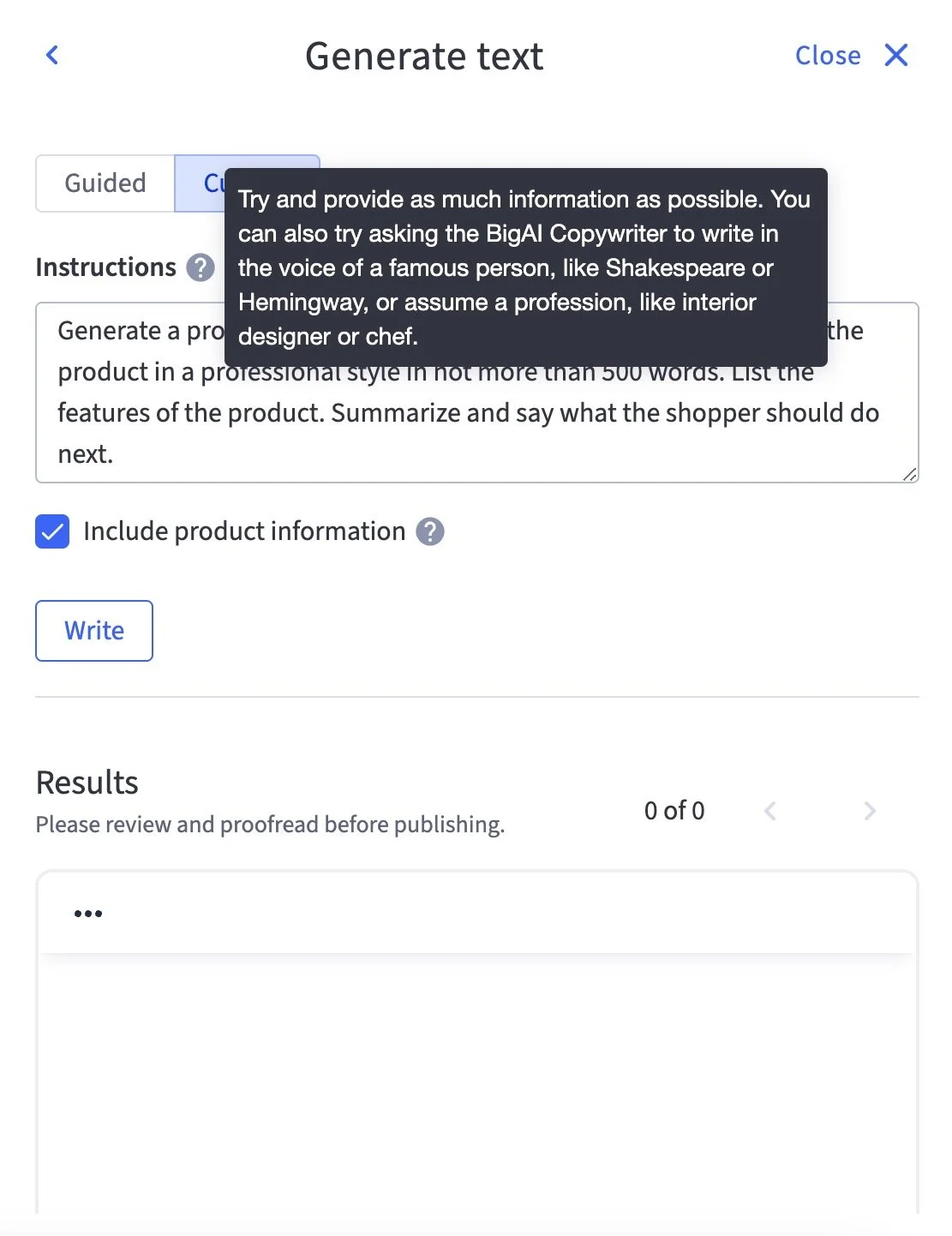
Early testing revealed the AI cramming keywords awkwardly into single sentences. I modified the underlying prompt instruction from an implicit "include keywords" directive to an explicit one: "insert the given keywords separately and naturally into the description." A small change with a significant impact on output quality.
Model tuning
A Pendo survey captured user ratings (1–5 stars) of AI-generated descriptions. I curated high-rated examples that met these criteria: matching product specifications, sounding authentic, organizing features logically, naturally incorporating keywords, and maintaining a human-like tone. These examples were used to further tune the model's outputs.
The best UX writing teaches without lecturing. Every tooltip in this product was a prompt engineering lesson that users absorbed without realizing it.
Results
The BigAI Copywriter launched in October 2023 on the BigCommerce App Marketplace, just four months after development began. It offered simplicity for casual users and advanced controls for experienced marketers, with a UI that made prompt engineering feel like filling out a form.