Two words that stopped a support ticket flood
In mid-2020, users started abandoning the Malwarebytes installer in alarming numbers. The product hadn't changed, but the world had. I was asked to audit the designs and figure out why.
The problem
The product team became aware of a sharp increase in users dropping out of the Malwarebytes anti-malware installer. The customer support team noted a corresponding spike in calls from customers having trouble installing the product. The installer had been around since 2018 and never caused problems before 2020.
I wasn't the original UX writer on this project, I was asked to audit the designs and find the issue.
The goal
Figure out why users were abandoning the Malwarebytes installer and contacting support for help. Fix the problem. Stop the influx of support tickets.
Empathizing with users
To determine which version of Malwarebytes to install, the product asked users: "Where are you installing Malwarebytes?" Users had two choices: Home or Business. Their answer determined whether they got the consumer-grade anti-malware or the enterprise-grade endpoint protection.
This design matched users' mental model, until COVID happened. With much of the world suddenly working from home, the distinction between "Home" and "Business" became genuinely confusing. And the question itself, "Where are you installing Malwarebytes?", sounds like a request for your physical location, which felt like a privacy concern to a user who was already installing anti-malware software.
Facing these pain points, it was easier for users to call support than use the product as designed.
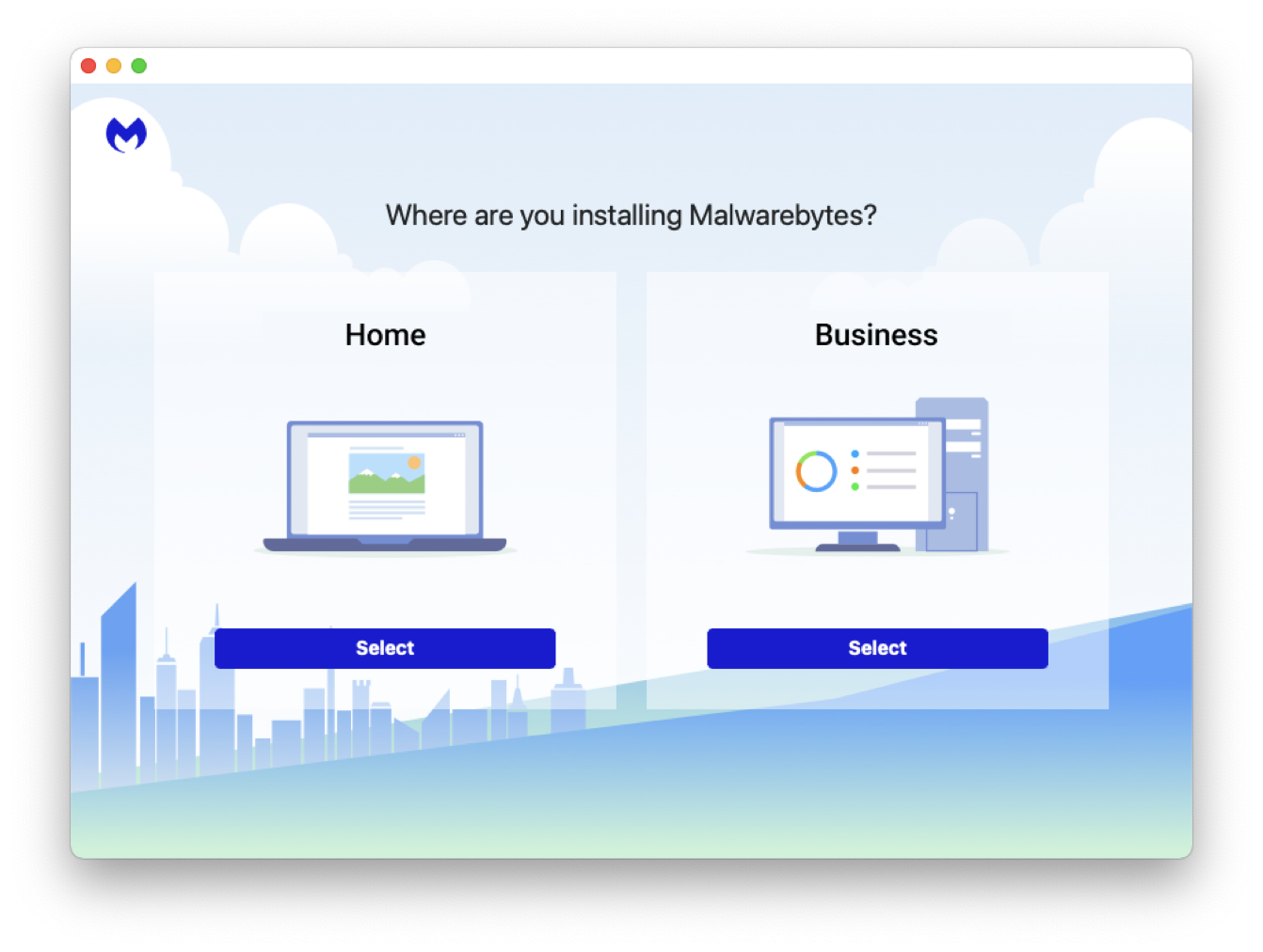
Support tickets confirmed my theory. Users said: "Installed the wrong version." "It says I have an invalid license key." "I don't know what I'm supposed to do." "Why are you asking for my location?"
The audience
Informational needs
- Is this the real Malwarebytes, or is this malware in disguise?
- Why are you asking about my location?
- What is the difference between "home" and "business?"
Jobs to be done
- Remove malware from my computer, now
- Give me a reason to trust Malwarebytes
- Get through this installer without calling support
Psychological profile
- Tesler's Law: Did we oversimplify by reducing the choice to two vague labels?
- Picture superiority effect: Do desktop tower images subconsciously signal "work" to users?
Ideation and design
The average Malwarebytes customer installs the product because they need to remove malware that's already on their computer. They're scared and have little patience. They need to be certain they're making the right choice. Facing any uncertainty, they will drop out and call support.
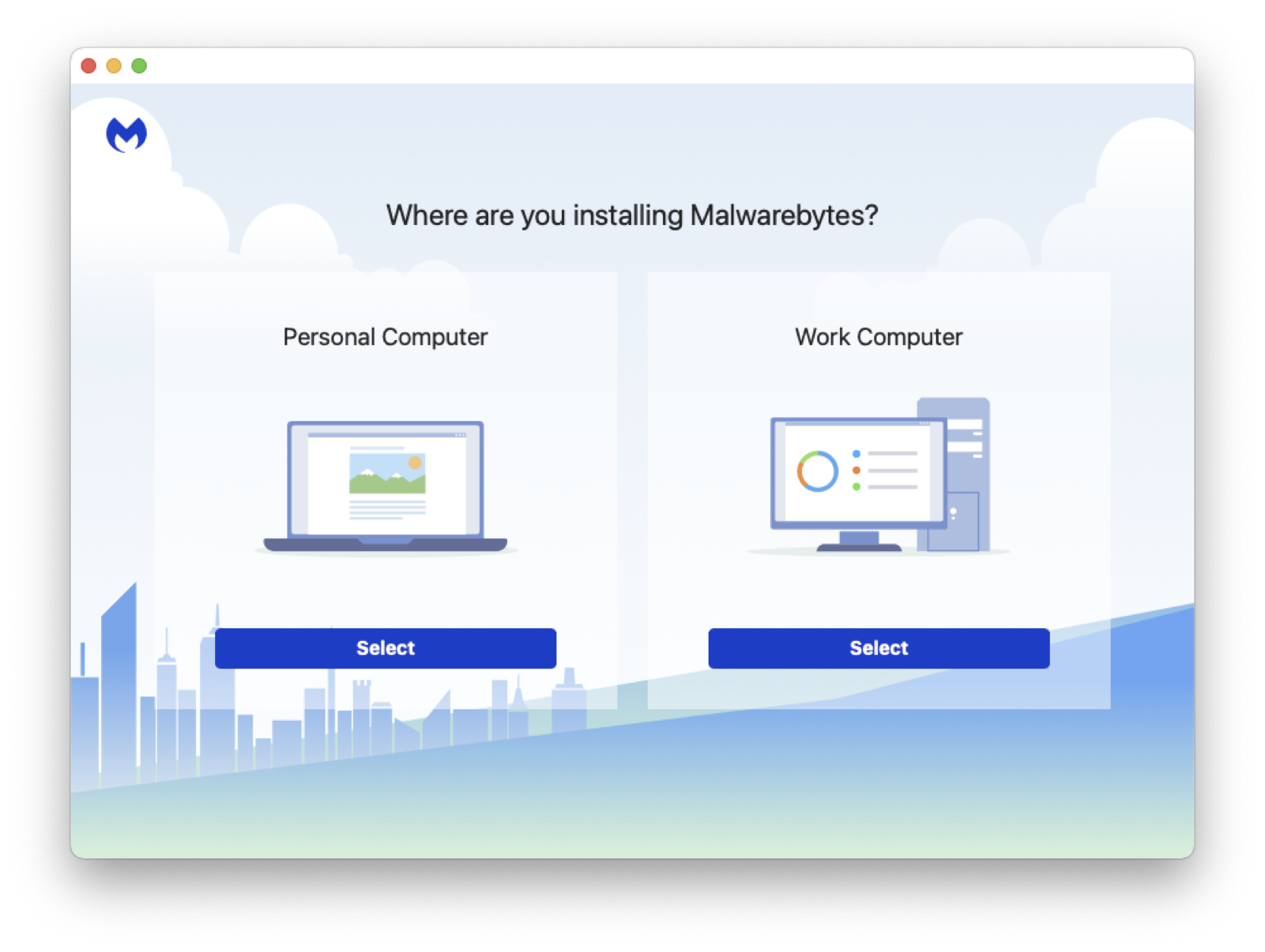
All we really needed to know was: "Do you own this computer?" That answer would let Malwarebytes install either the consumer or enterprise version. So I asked that we change the copy from Home / Business to Personal Computer / Work Computer.
I also recommended changing the images, tower-style desktop computers no longer reflect how most people work, and any implicit meaning was lost on the user.
Further iteration
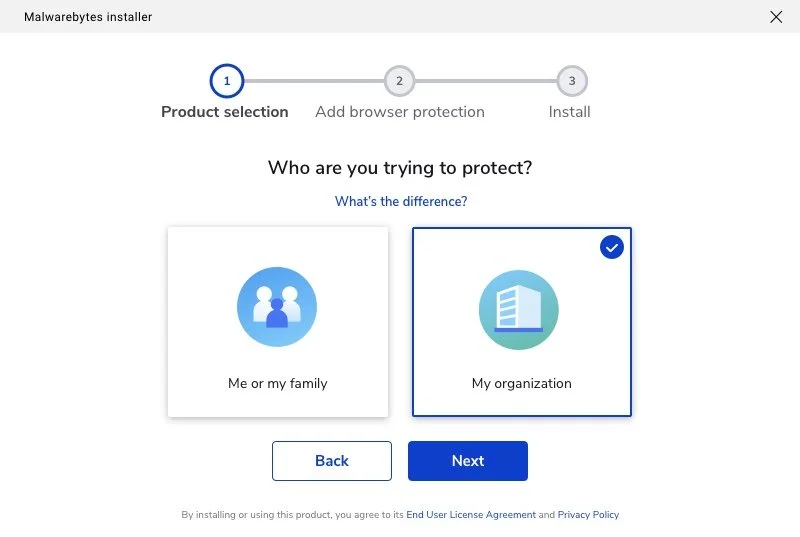
After the first revision, stakeholders were still worried about confusion. Looking at the copy again, I realized that the question "Where are you installing Malwarebytes?" still missed the point. Users weren't thinking about installing software, they were thinking about fixing their computer. Installing Malwarebytes was just the means to an end.
For the final iteration, I rewrote the copy to place emphasis on what the user actually wanted to accomplish, their job to be done. The visual designer updated the images to better represent the contrast between personal and workplace use.
Results
The hypothesis held. This small copy change had a measurable impact:
- Installer abandonment dropped from 35% to 25%, returning to pre-2020 levels
- Support tickets tagged as installer issues fell to less than 5% of all support tickets
"Who are you trying to protect" were the magic words that solved everything.