Designing a learning experience from the content up
Support content at RingCentral lived in silos. Videos, knowledge base articles, and training each had their own world, their own page, and no connection to each other. I led the content strategy to unify them.
The problem
Support content at RingCentral was fragmented across separate systems with no connection between them. Videos were hard to find and fit awkwardly into the UI. First-time users struggled to find quick answers in video form. Returning users who wanted to go deeper on a topic had no way to find related training and coursework.
The result: users who might have found their answer through self-service were instead dropping off or churning.
The goal
RingCentral's data showed that users who completed at least the intro course in RingCentral University were significantly less likely to churn after the first year, compared to users who took no courses at all. The problem was that the clumsy support site made it hard to actually find and take a course.
The goal: create a unified learning experience where how-to videos and knowledge base articles lived together, allowing curious users to discover additional relevant content like training and coursework.
The audience
Informational needs
- How do I do XYZ thing in RingCentral?
- I'm not a customer yet, how can RingCentral help my business?
Jobs to be done
- Learn how to use RingCentral as a new customer
- Get a quick answer to a simple problem
- Access in-depth product training
Psychological profile
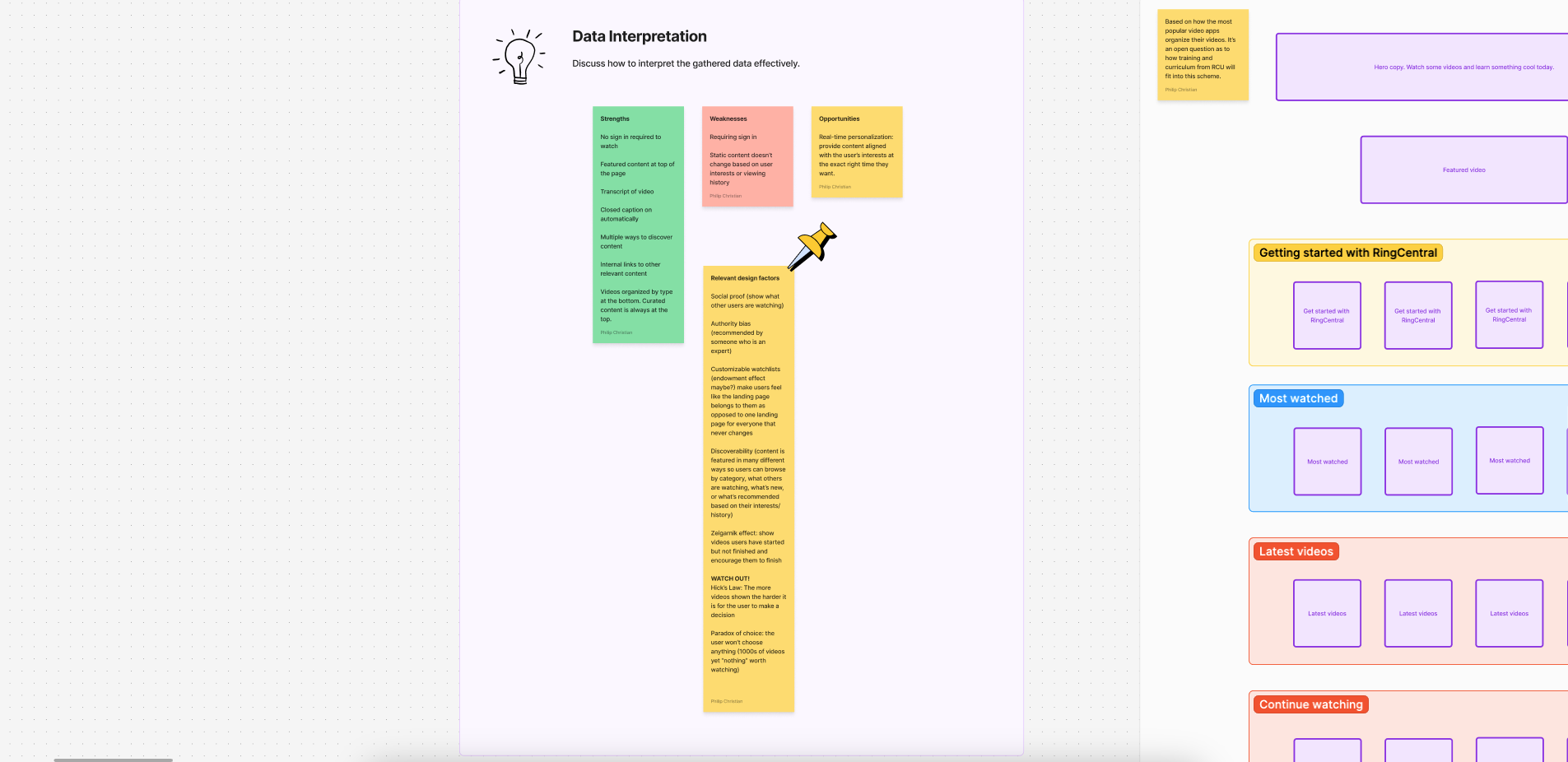
- Social proof: what are others watching?
- Zeigarnik effect: compelled to finish what's started
- Hick's Law: more choices = harder to pick
- Paradox of choice: too much = pick nothing
Ideation and discovery
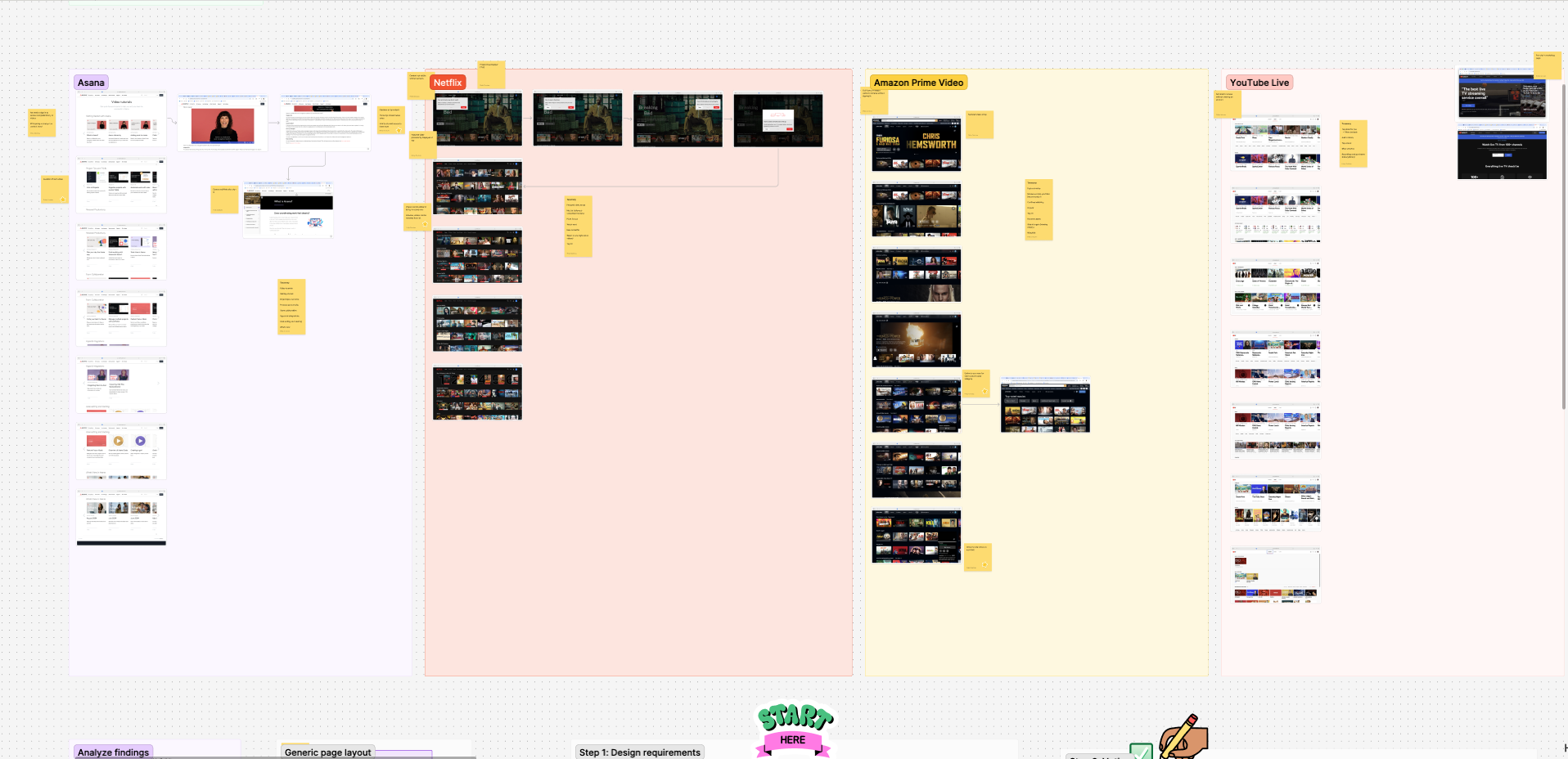
We started with a competitive review of other support sites. Since RingCentral had substantial video content, I suggested we also look at popular streaming services, studying how they handled discoverability, watchlists, and content recommendation.
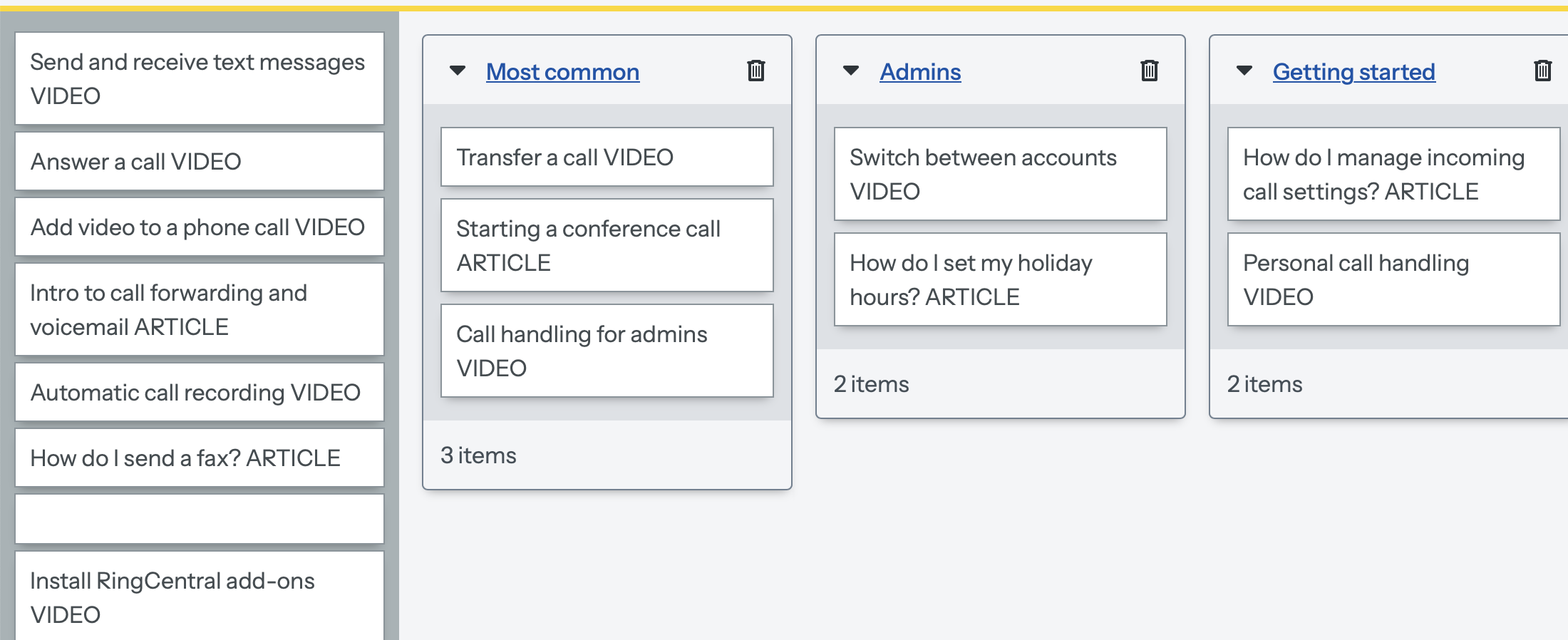
To guide the information architecture for the new learning site, I conducted a card sorting exercise with RingCentral employees. Cards featured a sampling of different content types. Participants sorted the content into buckets and named the categories themselves, giving us a taxonomy grounded in how real users actually thought about the content.
Design requirements
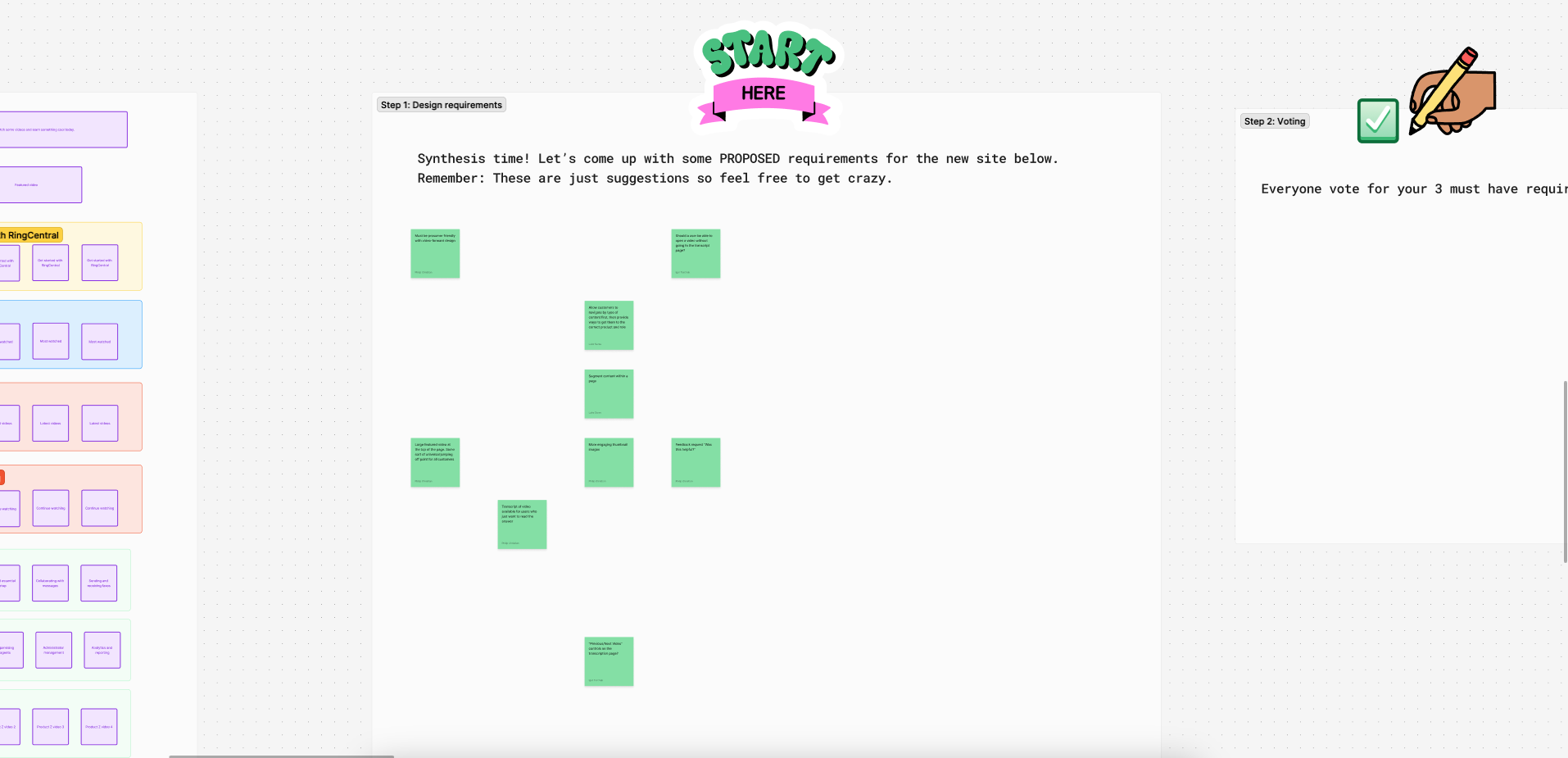
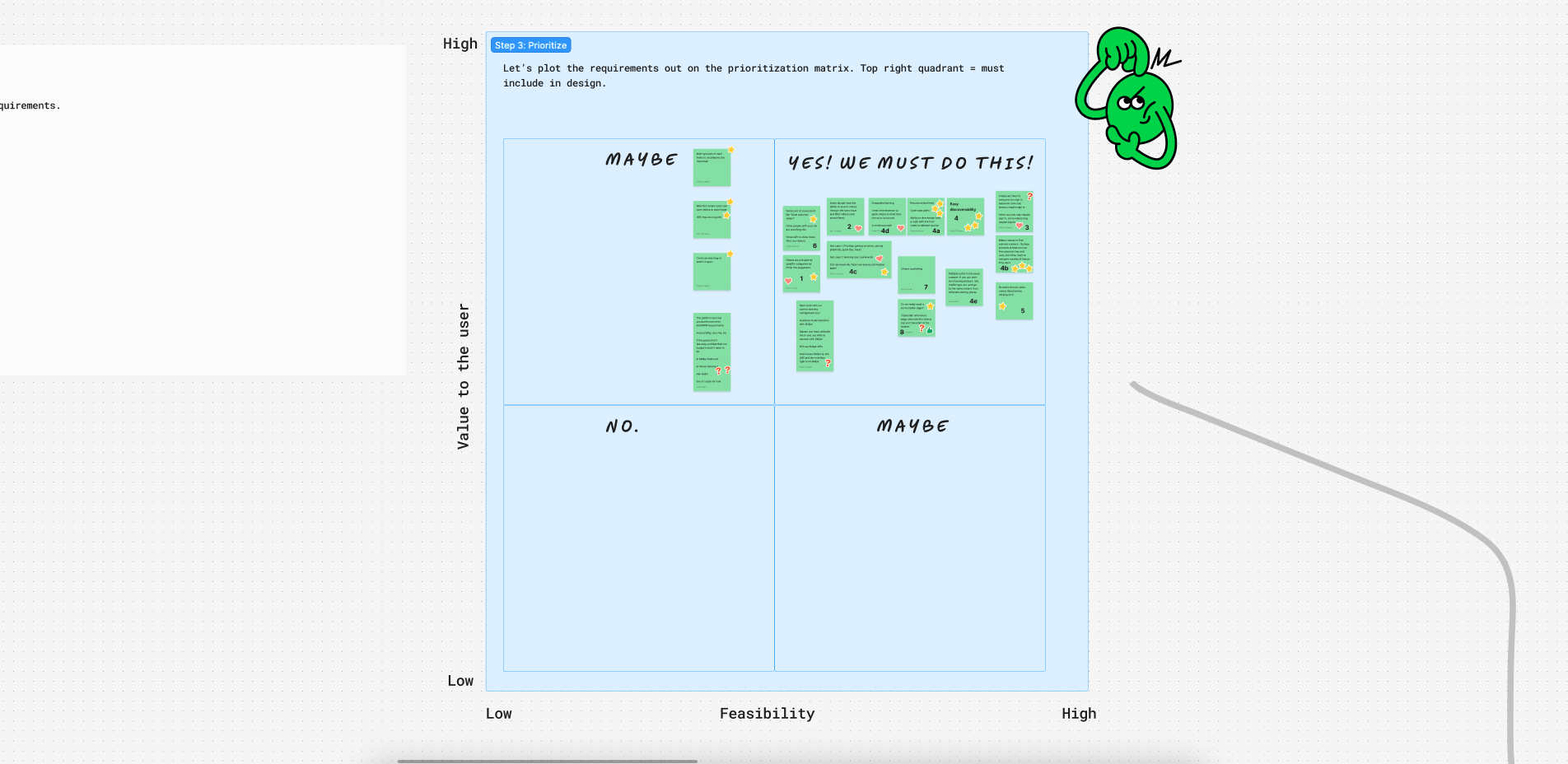
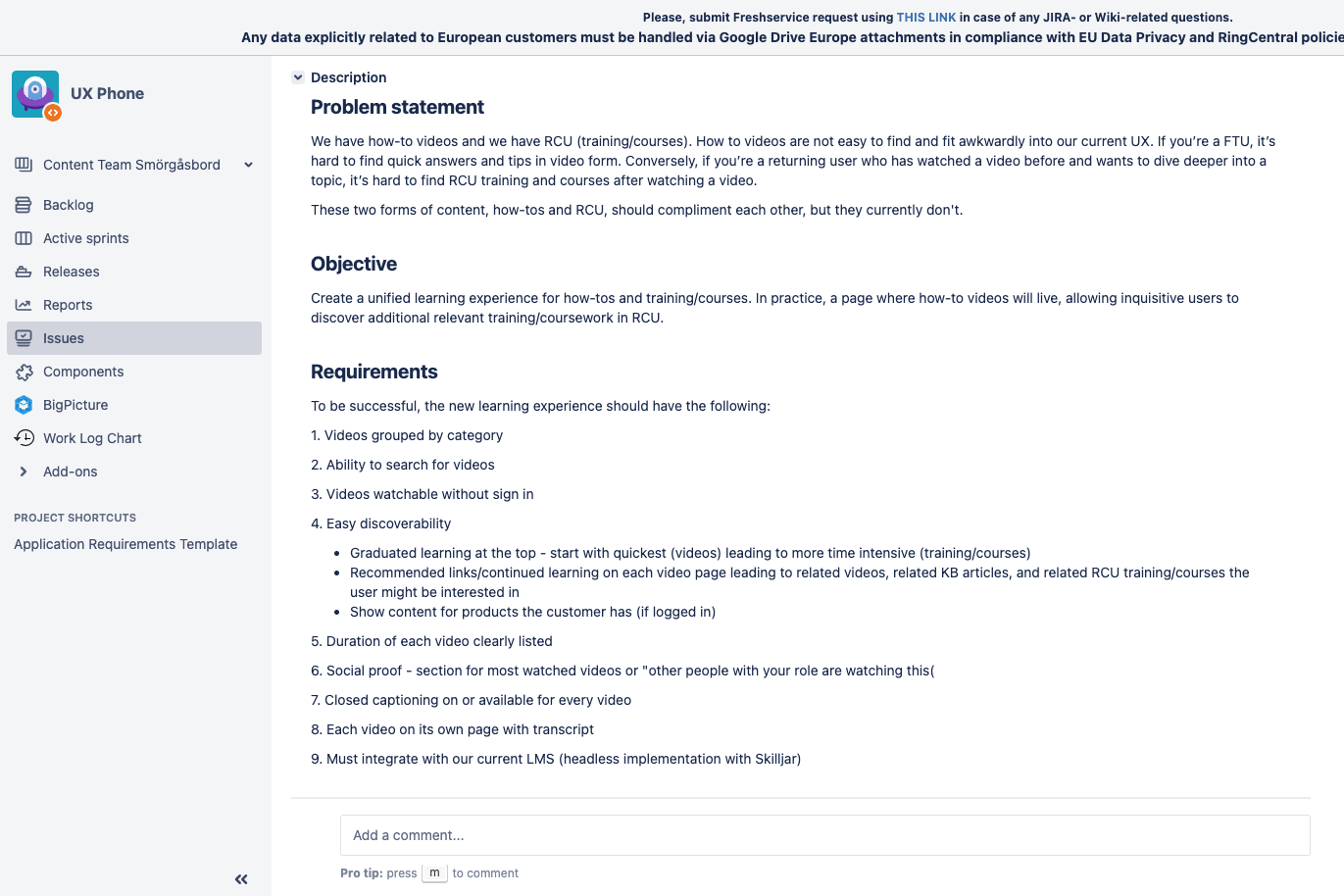
Working with the product designer and product manager, we created a wishlist of design requirements, then plotted them on a value vs. feasibility matrix. Anything in the upper right, high value, relatively easy to build, became our priority. I then wrote the design document, outlining the problem, objective, and requirements for the engineering team.
Content-led design means the structure of the experience emerges from what users need to know, not from what's easiest to build or what the CMS makes simple to manage.
Results
The new learning site, which I named Watch and Learn, was still in progress at the time this case study was written. This project is included as an example of content-led design work: starting from user psychology and information architecture, and letting that drive the product shape, rather than the reverse.