Writing guide & content library
Hired as BigCommerce's first UX writer, I quickly identified a systemic problem: copy was inconsistent, designers were bottlenecked on me for routine interactions, and there were no content guidelines to defend decisions with. I built the infrastructure to fix all three.
The problems
As BigCommerce's first dedicated UX writer, I inherited a product with no content guidelines and no shared copy resources. The consequences were predictable:
- An excess of copy request tickets for routine interactions that any designer could handle
- Inconsistent copy across product domains, each team had developed its own patterns
- No content design guidelines made it hard to justify decisions to stakeholders
- My own writing lacked internal consistency: "On Monday I might write a status message one way. On Friday I'd write something completely different."
The goals
- Create a UX writing guide with voice, tone, and best practices
- Build a design library for reusable copy strings
- Enable designers to write their own copy for everyday interactions
- Reduce design debt and save time
- Improve overall writing quality across the organization
The audience
Informational needs
- Which word or phrase should I use here?
- How is this faster than asking the UX writer?
- Are other companies using similar solutions?
Jobs to be done
- Write quality copy for frequently used interactions
- Maintain consistency throughout the platform
- Work independently without waiting for the UX writer
Psychological profile
- Cognitive load: must be lower than just asking me
- Visual appeal: designers respond to well-designed tools
- Adoption: the system has to live where they already work
Ideation and development
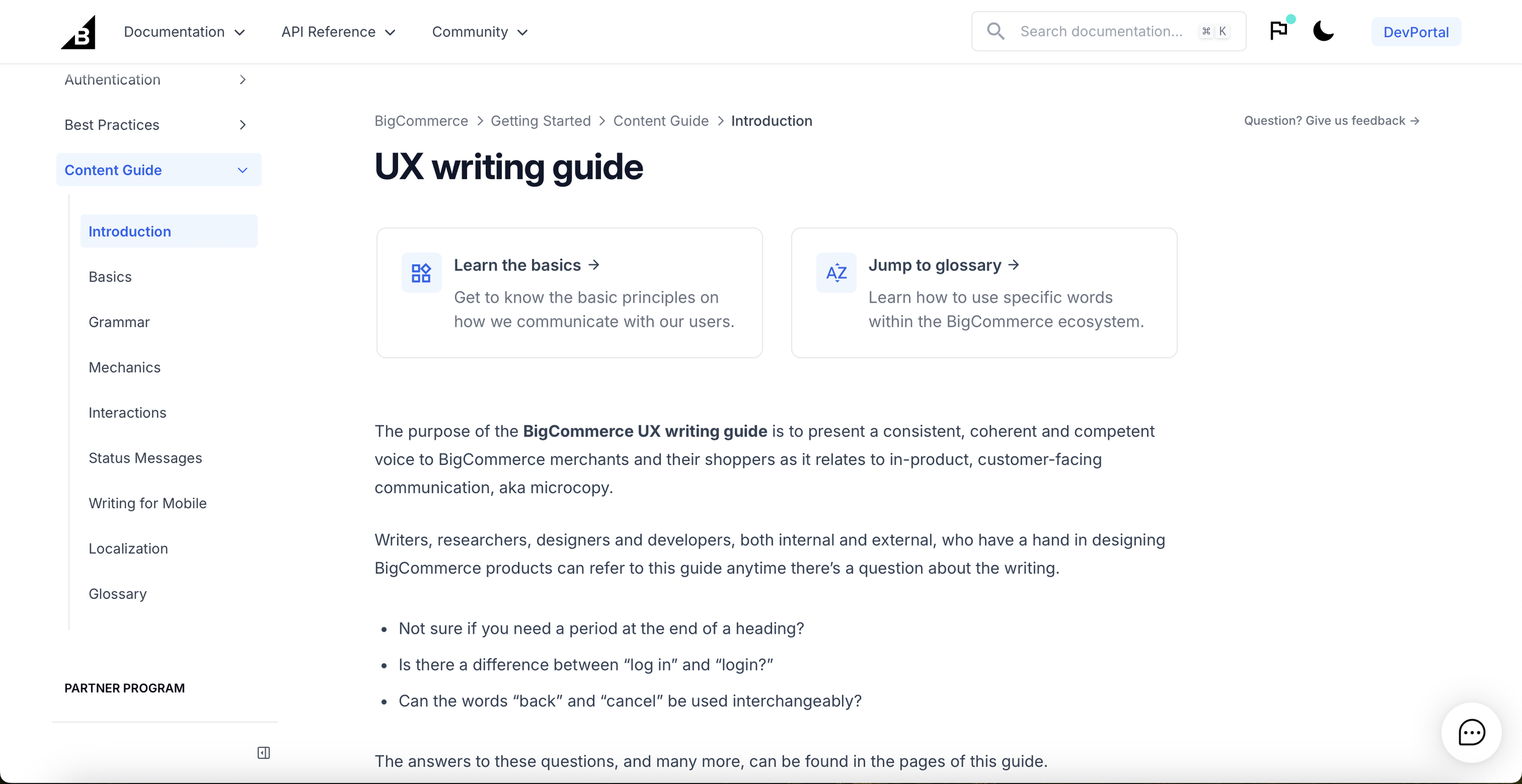
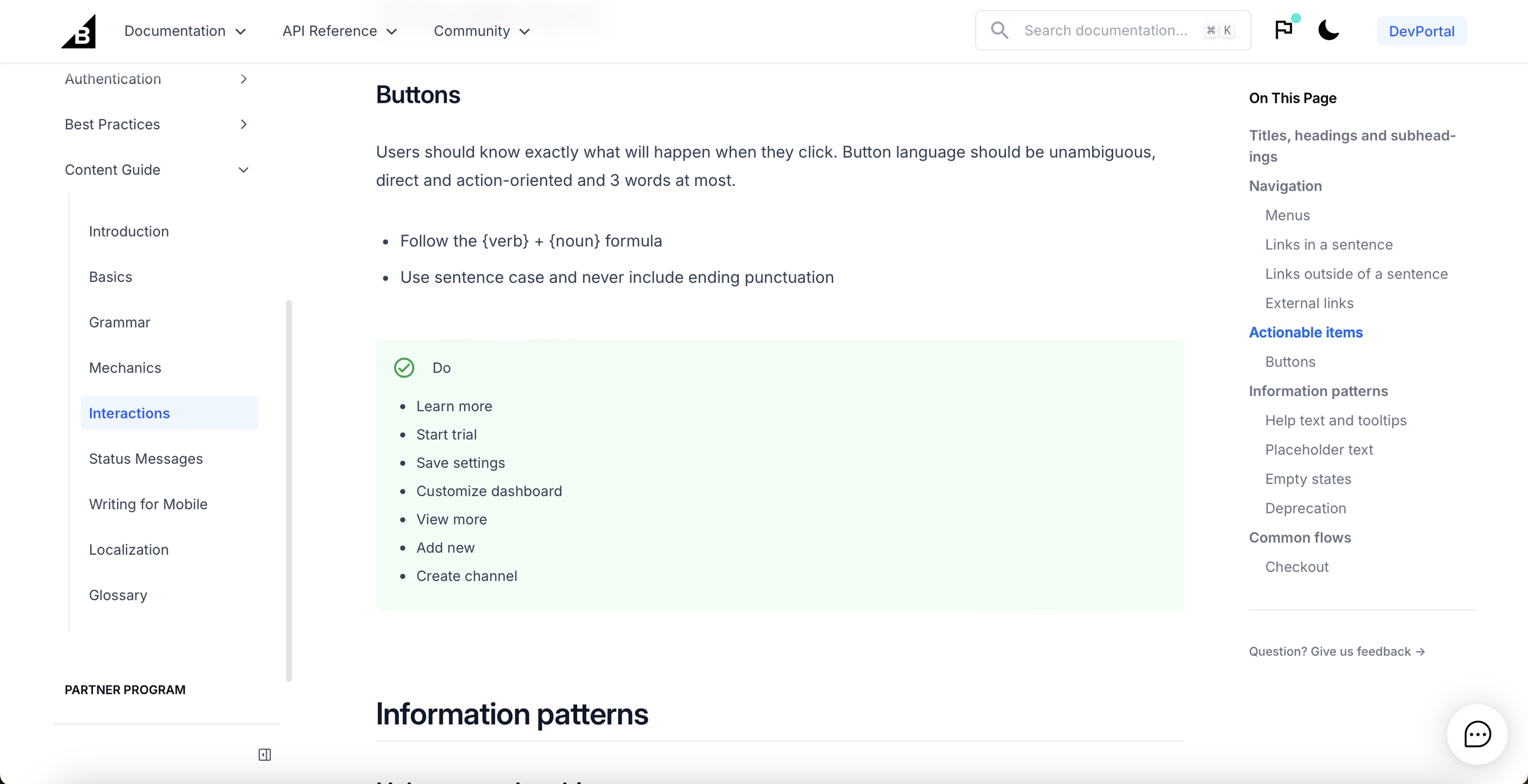
The writing guide had three requirements: convert theoretical advice into practical guidance, meet designers in the space where they already work (Figma), and create a taxonomy that made content retrieval fast and intuitive.
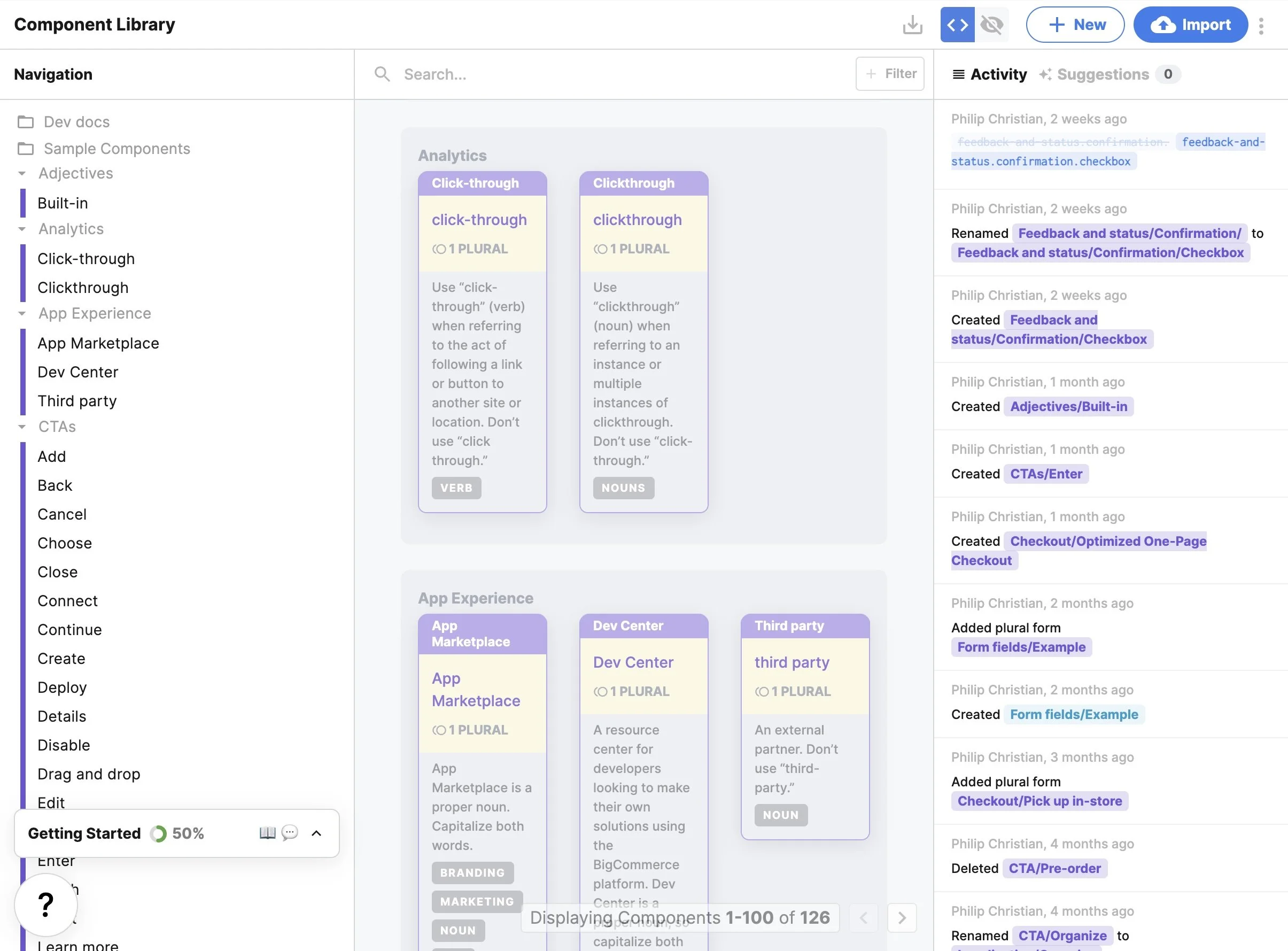
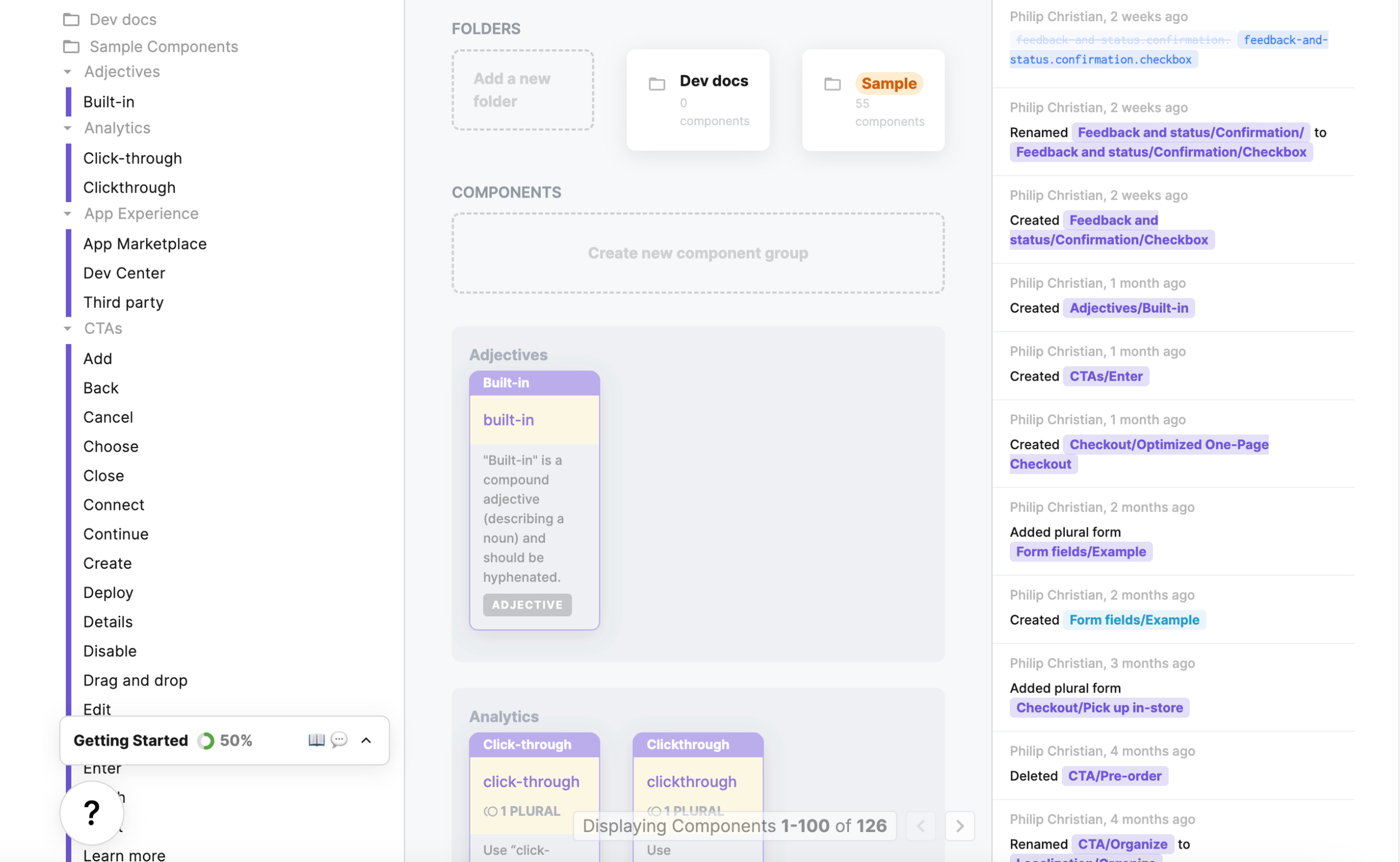
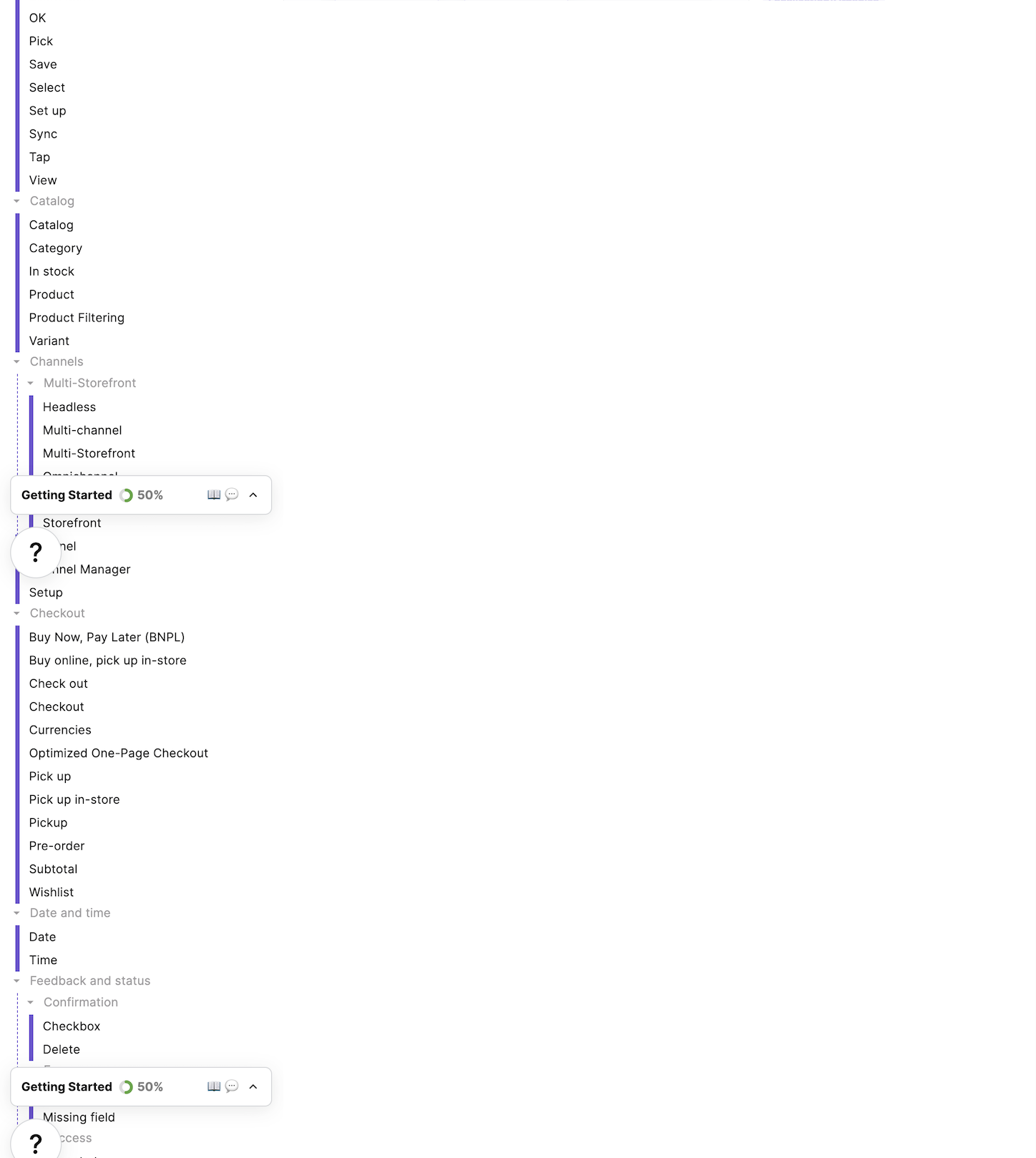
I selected Ditto, a Figma plugin that enables reusable copy components. A simple example: standardizing acknowledgment button labels across the product, which had accumulated variations like "OK," "Ok," and "Okay" across different domains. One component, one string, one truth.
You can read the UX writing guide I created for BigCommerce.
Iteration
The initial component library contained over 100 copy strings organized by parts of speech, verbs, nouns, adjectives, plus error, success, and confirmation statuses. Early feedback revealed that designers preferred navigation over search, and struggled to locate components in the original structure.
I ran a card sorting exercise with the design team using OptimalSort. The final taxonomy combined my original system with their mental model:
- Modals
- CTAs
- Status (error / success / confirmation)
- Input
- Product group (login / checkout / catalog / shipping)
- Parts of speech (noun / verb / adjective)
Results
The component library automated approximately 80% of the more mundane design interactions. Content-related Jira ticket turnaround improved from ~3 days to 2 days or less. Copy-related design debt decreased, with new tickets dropping to 7–12 per quarter while resolving 50–100 existing ones.
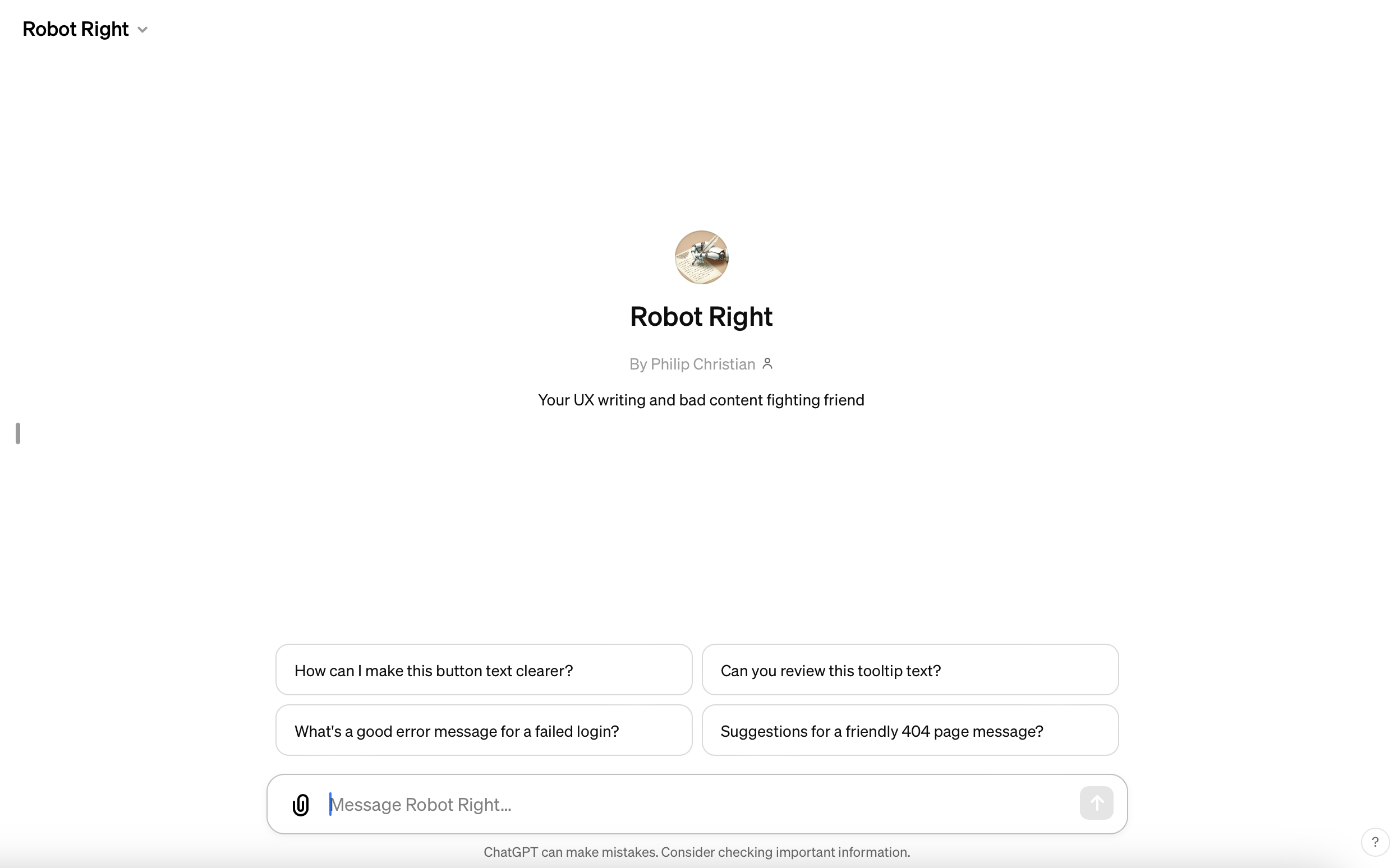
In late 2023, I built a proof of concept called Robot Right, a custom GPT trained on BigCommerce's content guidelines. It could validate existing copy against guidelines, generate new content following our standards, and answer voice and tone questions when I wasn't available. A glimpse of what AI-assisted content design systems could look like.